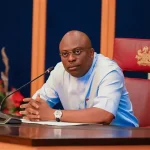
Chairman of the House Committee on Finance and Appropriation, Hon Okon Owuna, praised the participatory process, describing it as a hallmark of responsive leadership.
By TheInvestigator
The government of Cross River State has reaffirmed its dedication to participatory governance and financial transparency by hosting the Southern Senatorial District session of the 2026 Budget Consultative Forum on Tuesday at Transcorp Hotel in Calabar.
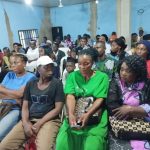
The forum, which follows earlier sessions in Ikom and Ogoja for the Central and Northern districts, brought together traditional rulers, legislators, civil society representatives, women and youth leaders, and market associations. It provided a platform to review the 2025 budget and gather citizens’ inputs for the 2026 fiscal plan—reflecting Governor Bassey Otu’s People-First governance philosophy.
In his opening remarks, the Special Adviser to the Governor on Budget Monitoring and Evaluation, Mr Otu Ita, said the exercise was “a practical demonstration of Governor Otu’s inclusive leadership style.” He emphasised that the series of zonal engagements signals the government’s resolve to institutionalise a bottom-up planning process that reflects the real needs of citizens.
“This is governance driven by the people and for the people,” Ita declared. “The Governor has made it clear that the 2026 Budget must emerge from citizens’ priorities, not just bureaucratic inputs.”
He described the Calabar forum as an opportunity for stakeholders in the Southern District to shape the state’s fiscal direction and ensure that “no community is left behind in the budgeting process.”
Chairman of the House Committee on Finance and Appropriation, Hon Okon Owuna, praised the participatory process, describing it as a hallmark of responsive leadership.
“The consultative meetings in Ogoja, Ikom, and now Calabar guarantee that every senatorial district has a voice,” he said. “That’s what participatory democracy truly represents.”
Owuna assured that the House of Assembly remains committed to passing a budget that reflects the collective aspirations of Cross Riverians, particularly in the areas of infrastructure, agriculture, and education.
Also speaking, the Commissioner for Finance, Dr Mike Odere, commended the robust public participation, noting that it reflects growing trust in the administration.
“Cross River State is redefining public finance management,” he said. “Our budgeting process is participatory, our tax system fair, and our projects people-centred.”
He assured that fiscal discipline and transparency would remain central to the 2026 budget.
The Accountant General of the State, Dr Glory Effiong, lauded Governor Otu for strengthening institutional efficiency and restoring public confidence in governance.
“This is a government that values everyone—from the aged to the youth and generations yet unborn,” she said. “Governor Otu has redefined public service ethics, and people are now proud to serve under his leadership.”
The Chairman of the Cross River State Internal Revenue Service, Mr Edwin Okon, urged residents to adopt a culture of tax compliance as a civic duty. He announced the introduction of a harmonised, technology-driven tax system beginning January 2026 to curb multiple taxation.
“We are not taxing poverty; we’re modernising tax administration to ensure fairness and efficiency,” Okon said. “Anyone earning ₦800,000 or less annually will be exempted from personal income tax—that’s how people-centred this government is.”
In his goodwill message, the Chairman of the State Traditional Rulers Council, HRM Ovai Solomon Edward Osim, applauded the administration’s 70 per cent budget performance and its decision to include traditional institutions in policy discussions.
“For the first time in recent memory, the traditional council is directly involved in the state’s budgeting process,” he noted. “It shows that the Governor listens and governs inclusively.”
Commissioner for Women Affairs, Hon Edema Irom, emphasised the importance of gender inclusion in the 2026 budget.
“We must always ask how many women benefit from agricultural inputs, empowerment grants, and enterprise support,” she said. “True development is inclusive—when women thrive, communities prosper.”
The session featured robust stakeholder engagements and wide-ranging contributions, underscoring a shared commitment to transparency, fiscal prudence, and inclusive development.
In his closing remarks, Mr Otu Ita thanked participants for their insights and reaffirmed the administration’s resolve to translate citizens’ voices into actionable policies.
“This is how we build a people-first government—by listening, engaging, and delivering,” he concluded.