Nurses on the frontlines in rural Cross River State are battling not only illness but also a crippling lack of knowledge, as reports by Orodata Science reveal a deepening crisis in Primary Health Centres, where outdated skills and total power failures are putting lives at risk, Archibong Jeremiah reveals in this special report.
From Bakassi to Ogoja, healthcare workers admit that they now rely on outdated notes, peer improvisation, and prayer to manage complex cases. Notably, 52 of 62 surveyed facilities’ staff reported no training in the past five years, and most facilities lack stable electricity to power vital equipment.
For Nurse Idem Inyang, the walls of her Primary Health Centre (PHC) in a remote Bakassi community in Cross River State don’t just hold patients; they hold her rising fear. A fear not of the usual challenges, the erratic power, the lack of clean water, or the patient rush, but of the knowledge she doesn’t have.
“When a patient comes in with a complication I haven’t seen since school, I have to rely on my old notes and a lot of prayer,” Idem, who has been a frontline PHC worker for over a decade, admitted with a weary sigh. “The world of medicine moves fast, but here, we are moving very slowly, if not backwards. We are the first contact for thousands of people, yet we are the last to be updated.” She lamented.
Idem’s predicament is not unique; it is the silent crisis haunting Nigeria’s primary healthcare system, particularly in states like Cross River.
The recent 2024 MyPHC report by Orodata Science shines a harsh light on this neglect, revealing a systemic failure to equip frontline health workers with the continuous training necessary to save lives. The report underscores that while some facilities are receiving training, the support is irregular, inadequate, and fails to address critical skill gaps.
It indicates that 52 out of 62 respondents have not participated in any training in the past five years (2019-2024). Additionally, only 42 respondents are aware of regular training opportunities, and 51 expressed dissatisfaction with their working conditions.
A Life-Saving Lesson Lost
In the vast landscape of public health, Primary Health Centres are the bedrock, the only medical access for Nigeria’s most vulnerable rural populations. The staff, predominantly Community Health Extension Workers (CHEWs) and Nurses/Midwives, are often called upon to handle emergencies far beyond their initial training, from complicated births to managing chronic non-communicable diseases.
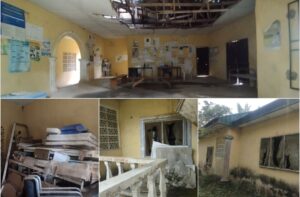
However, the Orodata Science data, reinforced by field interviews, suggests that a significant number of PHC workers are operating with outdated knowledge. Less than a quarter of facilities in Cross River are staffed by trained midwives, and even those with professional qualifications often go years without receiving refresher courses on new protocols or essential life-saving techniques.
“We are expected to handle everything from routine immunisation to severe pre-eclampsia,” says Mr George Abang, a CHEW in Ogoja. “But the last proper workshop I attended was five years ago. I learn more from my younger colleagues who just finished school than from the state system. When a pregnant woman comes in distress, if you are not creative and quick to respond, you would be blamed for whatever the outcome is, good or bad,” he said, as he took a deep breath.
This deficiency creates a dangerous gap. For instance, in maternal health, a major focus of PHC, the lack of recent training directly impacts the ability of staff to use new equipment (even if it were available) and confidently follow best-practice protocols for difficult deliveries. Cross River’s maternal mortality rate remains alarmingly high; the data reports 22 deaths from across the 62 facilities analysed across the 18 LGAs.
According to Grace Bullem, a native of Mpam Lagos in Ogoja, “The quality of care we receive is determined not by a caregiver’s heart, but by the recency of their last training certificate.”
Dedication Against The Odds
Despite the systemic neglect, the spirit of dedication among the PHC staff remains unbroken. In communities like Uyangha, Esighi, Umon Island, Mpam Lagos, Agoi Ekpo, and 15 more, these workers, often underpaid, without sufficient equipment, and facing personal security risks, are the only barrier between their people and disease.

They improvise. They share experiences. They use their own meagre salaries to fund basic supplies. For them, the call for better training is not a plea for a bonus; it is a genuine request for improvement. “It is a genuine request for improvement, a cry for the tools of competence, the knowledge that should allow us to do our job without the constant fear of failure,” Miss Janet Efoli, a junior CHEW, said.
“We don’t want to fail our people,” Nurse Angela Agbara insists, her voice jerking slightly. “We just need the government to invest in us as much as they talk about investing in buildings, the next election and carnival. A cracked wall is sad, but a broken training system is cruel. Give us the knowledge, and we can save lives, even when the lights go out.” She pleaded.
Darkness Deepens Health Crisis
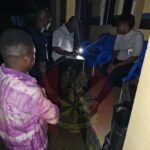
A damning new report by Orodata Science exposes another systemic failure in the State’s Primary Health Care system, where unreliable power supply or the complete lack thereof is directly affecting their service delivery.
The findings, detailed in the 2024/2025 “State of Power in Primary Healthcare” report, paint a grim picture of a health sector struggling in the dark.
In the 62 PHCs assessed across the 18 LGAs of Cross River State, nearly half of the facilities 47% lack any power source. For those who do have access, the supply is often unstable, severely impacting essential services.
The Consequences For Patient Safety
The outcome for patient safety and public health is catastrophic:
A shocking 77% of PHCs cannot support emergency oxygen therapy. This critical lack of power to run essential life-saving equipment places patients with severe respiratory distress at immediate and critical risk.

Whooping 60% of PHCs lack functional refrigerators due to power issues, compromising national and local immunisation efforts. This failure jeopardises the state’s ability to maintain the cold chain, threatening to undo progress against preventable diseases.
Power failures are directly responsible for 15% of all patient referrals. When equipment breaks down or diagnostic tools cannot be operated due to a lack of electricity, staff are compelled to send patients to distant hospitals, often with poorer outcomes.
For the PHCs that reported poor treatment quality, the link to the energy crisis is direct: 12 of the 17 facilities with poor ratings had no power, while the remaining 5 suffered from unstable supply.
CSO Network Calls On Government To Act
Speaking with TheInvestigator, the Cross River State Coordinator of Civil Society Network, Comrade Ben Usang, has said the implications of prolonged darkness in these facilities are dire, as it signifies that there is a health crisis.
He said, “I think it’s extremely disappointing that after another news report had said we are doing well with our PHCs, you know, we now find out that, in fact, you know, an actual factual report says 47 of those PHCs, primary health centres, basically are in darkness. If 47% of our facilities, including health facilities and primary health facilities, are in darkness, how are we performing in that area?
“Darkness leads to the fact that nothing happens in those facilities at night. So, basically, darkness means that we have a crisis, and nearly 50% of those facilities, or 47%, means that this is a terrible report. It’s very disappointing. That means a huge number of those facilities cannot attend to the needs of our people.”
On the issue of training, he fumed, “And also to imagine that a lot of those staff have not been trained for five years, a whole lot has happened in terms of information, the internet and artificial intelligence. Whatever knowledge you had five years ago is almost obsolete.” Describing the situation as “absolutely crazy”.
Calling on the government to act fast, Usang said, “You know, the government has to make healthcare very, very important. It affects everyone. These are the nearest facilities to our rural dwellers. And if this is the state of those facilities, then we have work to do. Then our government should not be celebrating in this aspect.”
Relatively, Mr Rolland Enya, a management consultant, called on the government to intensify efforts.
According to him, “So, basically, there’s a need for the government to re-jig their strategy on maintaining the PHCs and channel more funding, especially with regards to training, because training particularly deals, covers, takes care of a whole lot of things in terms of manpower development and motivating the staff to do better and to give more.”
Furthermore, he said “I also advise that government should also consider alternative sources of power to bridge that gap, because without power, I believe much of the work that should be done at the PHCs, preserving their consumables, medical consumables, even to the extent of doing certain surgical procedures, their capacity will be limited, thus causing pressure in the tertiary medical facilities.”
The Director-General of the Cross River State Primary Health Care Development Agency (CRSPHCDA), Dr Vivien Mesembe Otu, was contacted by TheInvestigator for her official response, but she did not reply.
The Information Officer for the Ministry of Information, Mr Kingsly Agam, was also contacted and did not respond to questions either.
This story was produced by TheInvestigator Health Desk, supported by the Africa Data Hub and Orodata Science.