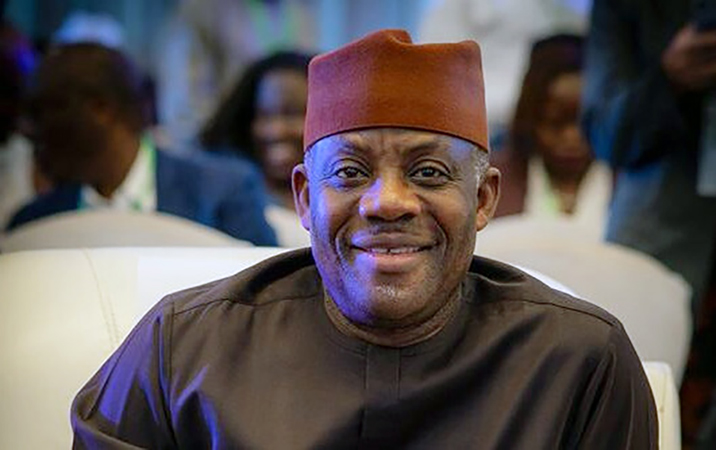
Alausa, accompanied by the Minister of State for Education, Suwaiba Ahmad, said the new policy was designed to end what he described as the growing abuse, politicisation, and commercialisation of honorary doctorate awards in Nigerian universities.
By TheInvestigator
The Federal Government has announced a sweeping crackdown on the misuse of honorary degrees in Nigeria, banning recipients from prefixing “Dr” to their names in official, academic, and professional engagements.
The government also unveiled a new National Research and Innovation Development Fund with an annual allocation of $500 million aimed at boosting research, innovation, and higher education development across the country.
The Minister of Education, Tunji Alausa, disclosed the decisions while briefing State House correspondents after the Federal Executive Council (FEC) approved two major memoranda presented by the Ministry of Education.
Alausa, accompanied by the Minister of State for Education, Suwaiba Ahmad, said the new policy was designed to end what he described as the growing abuse, politicisation, and commercialisation of honorary doctorate awards in Nigerian universities.
According to him, honorary degree holders who parade themselves with the title “Dr” despite not earning academic doctorates would now face legal and reputational consequences.
“The use of honorary degrees as earned academic qualifications is academic fraud,” the minister declared.
He lamented that honorary awards, once regarded as prestigious recognitions of exceptional societal contributions, had increasingly become tools for political patronage, financial influence, and institutional profiteering.
“We have seen honorary degrees being awarded for political reasons, financial gain, and even conferred on serving public officials, which violates the ethics surrounding such honours,” he said.
Under the new directive, recipients of honorary doctorates can no longer attach “Dr” before their names. Instead, they must clearly indicate the honorary nature of the award after their names using formats such as “LL.D. (Honoris Causa)” or “D.Lit. (Honoris Causa).”
Alausa explained that the policy seeks to restore credibility to Nigeria’s academic system and protect the integrity of legitimately earned doctoral qualifications.
The government also restricted Nigerian universities to only four recognised honorary degree categories: Doctor of Laws (LL.D.), Doctor of Letters (D.Lit.), Doctor of Science (D.Sc.), and Doctor of Humanities (D.Arts).
In a further clampdown, universities without active postgraduate and PhD programmes have been barred from awarding honorary doctorates altogether.
The minister said the move targets the growing trend of newly established institutions conferring honorary titles despite lacking academic research capacity or postgraduate structures.
“All honorary degrees must clearly carry the inscription ‘Honorary’ or ‘Honoris Causa’ on certificates and official references,” he added.
For years, critics within Nigeria’s academic community have accused some universities of turning honorary degrees into commodities awarded to wealthy individuals, politicians, and donors in exchange for influence or financial support.
Alausa recalled that efforts by the Association of Vice-Chancellors of Nigerian Universities to regulate the practice through the 2012 Keffi Declaration failed because the guidelines lacked legal backing.
“That declaration had no enforcement power. What FEC has now done is give the policy legal and executive authority,” he stated.
He disclosed that the Federal Ministry of Education and the National Universities Commission would immediately circulate the new guidelines to all vice-chancellors, registrars, and governing councils nationwide.
The government will also monitor university convocation ceremonies, publish annual lists of legitimate honorary degree recipients, and work with the media to discourage improper use of academic titles.
On research funding, the minister described the newly approved $500 million National Research and Innovation Development Fund as a landmark intervention that would unlock Nigeria’s untapped research potential.
He noted that although Nigeria possesses immense talent in science, innovation, and research, successive administrations failed to provide the financial support needed to transform ideas into national development.
Alausa commended President Bola Tinubu for approving the initiative, describing it as a bold step toward revitalising the country’s higher education and research ecosystem.