Beyond general waste management, the campaign placed strong emphasis on reducing food waste, which organisers identified as a critical but …
By TheInvestigator
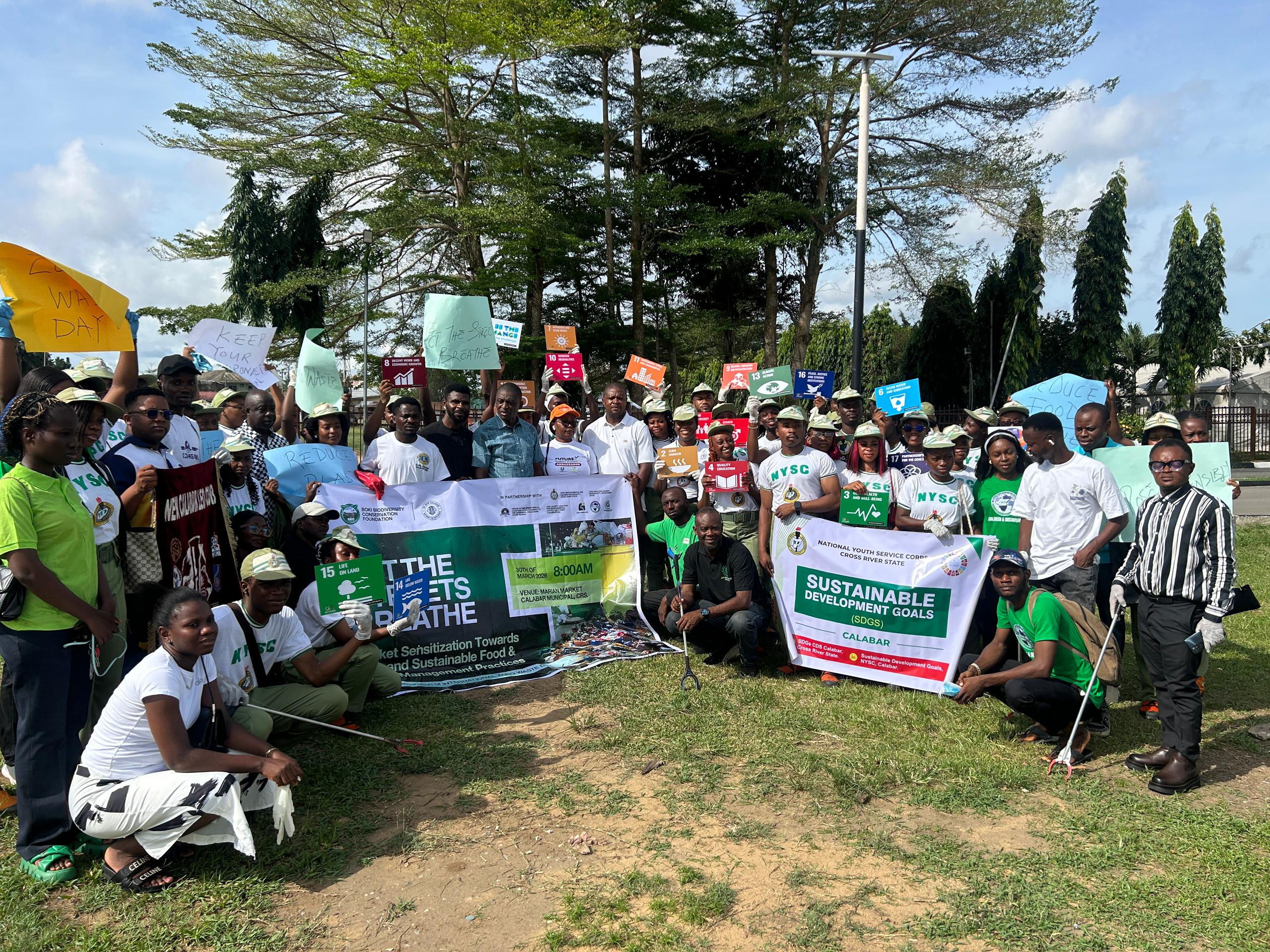
The De New Calabar Leo Club has taken decisive action to address poor waste management practices in Calabar Municipal, spearheading a large-scale market sensitisation campaign at Marian Market to commemorate International Zero Waste Day. The initiative brought together key environmental stakeholders in a coordinated push to drive behavioural change and promote sustainable waste and food management practices among traders and residents.
The campaign, themed “Let the Streets Breathe,” was implemented in collaboration with the Boki Biodiversity Conservation Foundation, the Office of the Senior Special Assistant on Environment to the Governor of Cross River State, the NYSC SDGs Community Development Service (CDS) group, Environmental CDS Calabar Municipal, Cally Green Hive, CRID, and the Civil Society Coalition for Environmental Justice and Forest Conservation. The multi-stakeholder engagement underscored a growing recognition that effective waste management requires collective responsibility and sustained community action.
More than 100 volunteers joined traders, market leaders, and members of the public in the sensitisation drive, amplifying awareness on responsible waste disposal and reinforcing the urgent need to protect public infrastructure and environmental health. The turnout demonstrated strong community interest in practical solutions to the persistent sanitation challenges affecting one of the state’s busiest commercial hubs.

Addressing participants during the exercise, the Senior Special Assistant to the Governor of Cross River State on Environment, Magnus Ntua, directly linked the recurring collapse of drainage infrastructure at Marian Market to the practice of indiscriminate waste disposal, particularly the habit of dumping refuse into drainage channels. He stressed that poor waste management is not only an environmental issue but a public safety and economic concern, as blocked drains contribute significantly to flooding, environmental degradation, pollution, and climate-related risks.
He called on traders and market stakeholders to adopt disciplined waste disposal practices and take ownership of the sanitation conditions within their business environment, noting that sustainable markets depend on responsible daily habits.

Beyond general waste management, the campaign placed strong emphasis on reducing food waste, which organisers identified as a critical but often overlooked contributor to environmental pollution and greenhouse gas emissions. Traders were encouraged to adopt smarter food handling, storage, and disposal practices as part of broader efforts to build climate-resilient and environmentally responsible marketplaces.
Speaking on the significance of the initiative, President of the De New Calabar Leo Club, Sir Bright Ebuka Nwokeocha, described the campaign as a strategic intervention aimed at driving long-term behavioural change rather than a one-off awareness activity.

He stated that the “Let the Streets Breathe” campaign represents a practical call to action for traders, residents, and institutions to commit to sustainable practices that safeguard public health and protect the environment. He emphasised that consistent adherence to proper waste disposal and responsible food management is essential to building cleaner communities, preventing infrastructure damage, and securing a healthier future for future generations.