

Through this programme, Orodata Science helped strengthen media houses, raise a new …
In newsrooms across Nigeria, the struggle to practice journalism in a complex world is real. Many wonder if they got more than they bargained for. Because, the age of digital misinformation, health crises, shrinking media revenues, data overload, and widespread distrust of public institutions has created a landscape where truth is increasingly difficult to find and even harder to convey.
But in August 2025, something remarkable happened. A new wave of capacity-building, structured, intentional, and forward-thinking initiatives began to ripple through the country. Prominent amongst them is Orodata Science, an NGO shaping the practice of development journalism. Through the Newsroom Health Desk Training, journalists from over two dozen newsrooms did not just learn new skills; they were equipped to redefine journalism itself.
This wasn’t another generic workshop. It was a blueprint for the future of evidence-driven storytelling. It was a call to action: that journalists can, and must, become architects of public accountability and health system transformation.
I know you may be wondering if this is their first approach. The answer is No. Orodata Science combines data science, technology, design, and research to improve institutional reforms, foster media innovation, bolster health systems, and facilitate access to inclusive and rich data.
Before this, in 2024 Orodata Science had engaged journalists and data scientists, trained them to collect and analyse data from PHCs across the country, which led to the launch of CheckMyPHC. These journalists were also empowered to produce high-end investigative stories that spoke to the gathered data.
In its over a decade of existence, more than 3,060 journalists have been supported, over 60 investigative reports have been published, over 60 government MDAs have been strengthened, over 100 CSOs have been boosted, and 18 million citizens have been reached.
A New Breed Of Storytellers
The six-week training opened on Thursday, August 21, 2025, with a grounding in data journalism fundamentals, a field still emerging in many Nigerian newsrooms. Under the guidance of experts Hannah Naiyeju and Jaye Gbenga, participants began their journey by confronting a simple but powerful question:
What is data journalism, and why does it matter?
Today’s big stories in health, climate, governance, and inequality are rooted in numbers, trends, and patterns. The training emphasised something many newsrooms overlook: data isn’t just numbers; data is people. Behind every spreadsheet is a life, a community, a failure of governance, or a breakthrough waiting to be uncovered.
As Hannah guided participants through identifying credible datasets, understanding biases, cleaning messy information, and crafting story ideas, a quiet confidence began to grow. Suddenly, journalists who once feared spreadsheets were using them to decode Nigeria’s social realities.
They began seeing story angles everywhere: in budget lines, in public health dashboards, in government websites, in neglected communities, in the silent gaps where data should exist but doesn’t.
From Numbers To Narratives
Week two introduced a shift: analysis. If numbers tell one half of reality, interpretation tells the other. Under the mentorship of media veteran Lekan Otufodarin, participants learned to craft compelling narratives from raw data. They discovered how a single chart could anchor an entire investigation. They practised writing leads that didn’t just inform but moved.
Lekan reminded them that: “Every powerful data story begins with a human heartbeat.”
His sessions delved into ethics, too, how far journalists can go, what should be published, and what must be protected in a world where data privacy is increasingly fragile.
By the end of the week, journalists were pitching projects that could shift conversations in their communities.
Mapping The Invisible: Geospatial Journalism Arrives
One of the training’s most transformative segments came in Week 3, led by geospatial data specialist Tricial Godvisanmy. Many journalists had never imagined themselves using digital mapping tools, but within hours, they were working with QGIS, Mapbox, Google Earth, OpenStreetMap, and CartoDB.
What once seemed like “scientific tools for experts” became powerful storytelling instruments.
They learned to: Map hospitals and health facilities, trace the impact of flooding on rural communities, identify accessibility gaps, gеotag public infrastructure, and validate coordinates with precision.
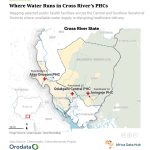
Then, Eromosele John took it further. He showed them how maps reveal what text often hides: inequalities stretching across regions, forgotten settlements, climate threats, ghost projects, and fragile health systems. His case studies on mapping healthcare points of interest opened participants’ eyes to the possibilities of geographic accountability journalism.
Solutions Journalism: Elevating Hope, Not Just Problems
Nigeria is no stranger to problems, and its media landscape often reflects that reality. But Week 3’s Solutions Journalism track, led by Chibuike Alagboso, challenged that mindset.
Participants learned the four pillars of Solutions Journalism (SoJo): response, evidence, insight, and limitations.
Chibuike taught them how to identify genuine interventions, ones that have a measurable impact rather than amplifying political propaganda or surface-level initiatives. The sessions emphasised avoiding hero-worship, resisting hype, and grounding solutions in reality.
They examined real Nigerian success stories: community-led flood control systems, maternal health innovations, and school nutrition improvements.
By the end, many journalists admitted it was the most refreshing shift in their careers, learning how to report hope responsibly.
Fact-Checking Meets Storytelling
No modern journalism training is complete without fact-checking, and Week 4, anchored by Caleb Ijioma, delivered some of its most eye-opening sessions.
From reverse image search and video verification to metadata analysis and tracking social media manipulation through tools like CrowdTangle and the Wayback Machine, journalists learned how to protect the public from falsehoods.
In an era where misinformation spreads faster than truth, these skills weren’t just useful; they were lifesaving.
Deep Dive Into Impact, Ethics, And The Soul Of Journalism
Across the ethics modules led by Ilevbaoje Imoukhuede, participants wrestled with the hardest questions in modern journalism:
How do we protect vulnerable communities while reporting their struggles? What does true impact look like: policy change, social action, community empowerment? How do we avoid bias in the stories we tell and the charts we design? How do we engage communities before and after publication?
These sessions didn’t just teach ethics, they taught empathy. They reminded participants that journalism is a public trust, not merely a profession.
The CheckMyPHC Tool: Opening The Gates Of Health Accountability
By Week 5, David Ajikobi set the tone by staking Fact Checking for the Digital Age, where he hammered on Learn foundational principles and workflow for verification in journalism, among others.
The training then shifted squarely into one of Nigeria’s most pressing needs: primary healthcare reform, with Hannah Naiyeju again leading. Journalists explored the CheckMyPHC platform, a database revealing the true conditions of PHCs across the country.
They examined staffing shortages, infrastructure gaps, dilapidated buildings, services offered or missing, and compared states and LGAs.
Journalists who had long suspected failures in the healthcare system now had hard evidence.
When Journalism Meets Technology: The Future Is Here
The final stretch, Emerging Technologies in Healthcare Education, led by Prof Lutz Mukke, was a powerful reminder that the world is moving fast.
Journalists explored:
Digital simulations in medical training, mobile learning platforms like Lecturio, health-tech startups reshaping care delivery, and the digital literacy required to cover the future of healthcare.
Many left these sessions with renewed curiosity about how technology could close Nigeria’s health gaps.
The Final Day: A New Generation Steps Forward
The training concluded with a presentation of final data story prototypes, complex, visual, deeply researched stories ready for publication. These weren’t just assignments; they were seeds of impact.
Some projects explored the distribution of health facilities. Some investigated staffing shortages. Others mapped climate risks or uncovered budget gaps. But all of them shared one theme: A belief that journalism can change lives.
Through this programme, Orodata Science helped strengthen media houses, raise a new generation of journalists, curious, courageous, data-literate, ethically grounded, and unafraid to challenge power using facts.
And in a country where access to health, justice, and dignity often depends on who tells the story, this may be one of the most important revolutions of our time.
Archibong Jeremiah, Editor of TheInvestigator, is a Frontline Investigative Programme Fellow and writes from Calabar, Cross River State. The Frontline Investigative Programme by Orodata Science was supported by the Africa Data Hub.