


According to findings in this report, the Federal Ministry of Environment allegedly misappropriated funds meant for erosion and flood control projects in the Jere Local Government Area of Borno State. The report also alleges that poor implementation of a drainage system occurred under the supervision of ministry officials. Consequently, the situation for residents has severely deteriorated, with parents fearing to let their children attend school due to the infected, stagnant water waterlogging their community.
By Muhammad M Ali
Across Africa, the rainy season usually brings relief, but in Nigeria’s northern community, Mallam Hassan Shettima joins a host of others, including school children, to face horror. Each time the season returns, it means a period of malaria, cholera, and debilitating skin diseases due to the stagnant, contaminated floodwater that sits in his house for days at a time.
There is a pattern to the challenge, and that is alarmingly constant. Every year of rain, hundreds of residents in the Ajilari-Ngomari community, Jere Local Government Area of Borno State, must involuntarily vacate their houses.
On the surface, this looks like a natural disaster. But a deeper look at the records reveals that this crisis could have been avoided—or at least minimised—if the ₦60 million in erosion and flood control projects funded by the federal government in the community had been executed effectively.
An investigation by YERWA EXPRESS NEWS reveals that, despite full payment made to the contractors involved in the project, the first project was started and then abandoned. In contrast, the second one was left unexecuted.
Federal Ministry of Environment Paid in full, yet the project unexecuted
Section 35 of the Public Procurement Act 2007 (as amended) said that after a contract is awarded, the contractor should be entitled to only 30% of the contractual amount, otherwise known as a mobilisation fee. He will only be reimbursed after submitting his interim payment certificate detailing a breakdown of the work executed or materials delivered since the project started.
Subsection (3) of the provision even went further to establish that any contractor who receives a mobilisation fee and absconds or fails to execute work commensurate to the payout is guilty of an offence and punishable by two years’ imprisonment or a fine equivalent to the fee paid (or both).
However, contrary to the provision of this law, the ministry, after contract award in 2023, paid the contractors almost a hundred per cent in a single payment. Yet, the project was unexecuted, and another was abandoned and uncompleted.
A budget document retrieved during the course of this investigation found that the Federal Ministry of Environment in 2023 budgeted N60 million separately for erosion and flood control works at Ajiari Cross, Jere Local Government and “Erosion and flood control works at Jere, Borno State.” Both projects, N30 million each, were awarded to Henrybuz Global Service Limited and Dallas Engineering Limited.
Financial records obtained from the Open Treasury Portal indicated that after tax and administrative charge deductions, the ministry paid the contractors ₦24,673,120.02 and ₦24,677,276.28, respectively. This means that almost N30 million of the entire cost for the projects was paid to the contractors long before they began the execution of the projects. Four years later, the project remains uncompleted and unexecuted.
Section 57 of the Public Procurement Act that speaks on code of conduct bars officials from awarding contracts to themselves, their relatives, or companies in which they hold substantial personal or family ties without prior disclosure and recusal.
Section 58 of the act further outlined the penalties for such conflicts of interest and corrupt practices, making the award of contracts without adherence to these ethical and legal provisions a criminal offense, punishable by imprisonment and dismissal from service.
However, when contacted on the status of implementation, the Borno State office of the ministry directed this reporter to one Haruna Tijjani as their contact person in the community to shed light on how the project was executed.
However, findings in the community reveal that Mr Haruna is more than a contact person. He didn’t only lobby for the project through his brother, Hassan Musa, who was then the permanent secretary of the ministry, but also participated in the project planning and implementation.
In fact, he accommodated officials of Henrybuz Global Service limited in his house after they arrived from Abuja.
When interviewed, Mr Haruna confirmed the residents’ account, reiterating that“I personally lobbied for the project when my brother was a permanent secretary in the ministry. Initially, it was meant for our locality, but seeing the problem I was having in my new community, my brother assisted. I received the contractors here in my house,” Haruna said.
It was further confirmed by Mr John Kwada whom Mr Haruna had misrepresented as the contractor. Mr Kwada later clarified that he is a staff member of the Federal Ministry of Environment working from the headquarters in Abuja and only accompanied the contractors to the state.
“The only thing I will tell you is that Mr Haruna personally lobbied for this project from his brother, Engr. Hassan Musa, who was our permanent secretary here in Abuja. That is why we were sent to Mr. Haruna’s location,” Mr Kwada said.
Although Hassan Musa had retired in 2022 and later been appointed senior special assistant on environment and climate change by the former President Muhammadu Buhari, he might have participated in the budget planning of 2023 and influenced the project for his brother’s sake, and this arguably became the truth as further findings in the project site would reveal.
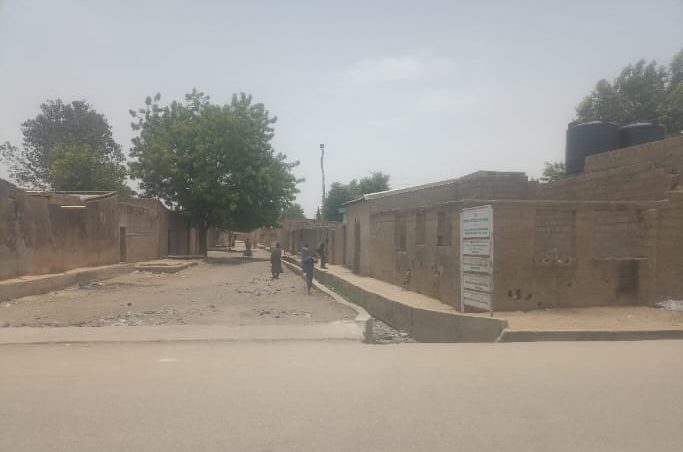
In the community, our correspondent found a drainage system of more than half a kilometre constructed from a signboard’s position into the community. The signboard, bearing the name of Henrybuz Global Service Limited contracted by the ministry, was positioned close to Mr Haruna house and pure water factory.
To a layman, the drainage system appears to be a well-thought-out idea to empty water from the community into the major road’s drainage system. But this is not what the drainage was doing. Instead, it was pushing more water, including from the neighbouring communities of Ngomari and Bulumkutu axis, into the community. The waters that would ordinarily pass before Mr Haruna’s house and pure water factory were also diverted by the new drainage. When it terminated inside the community, it was only linked to yet another abandoned drainage system, causing the water to remain in the community.
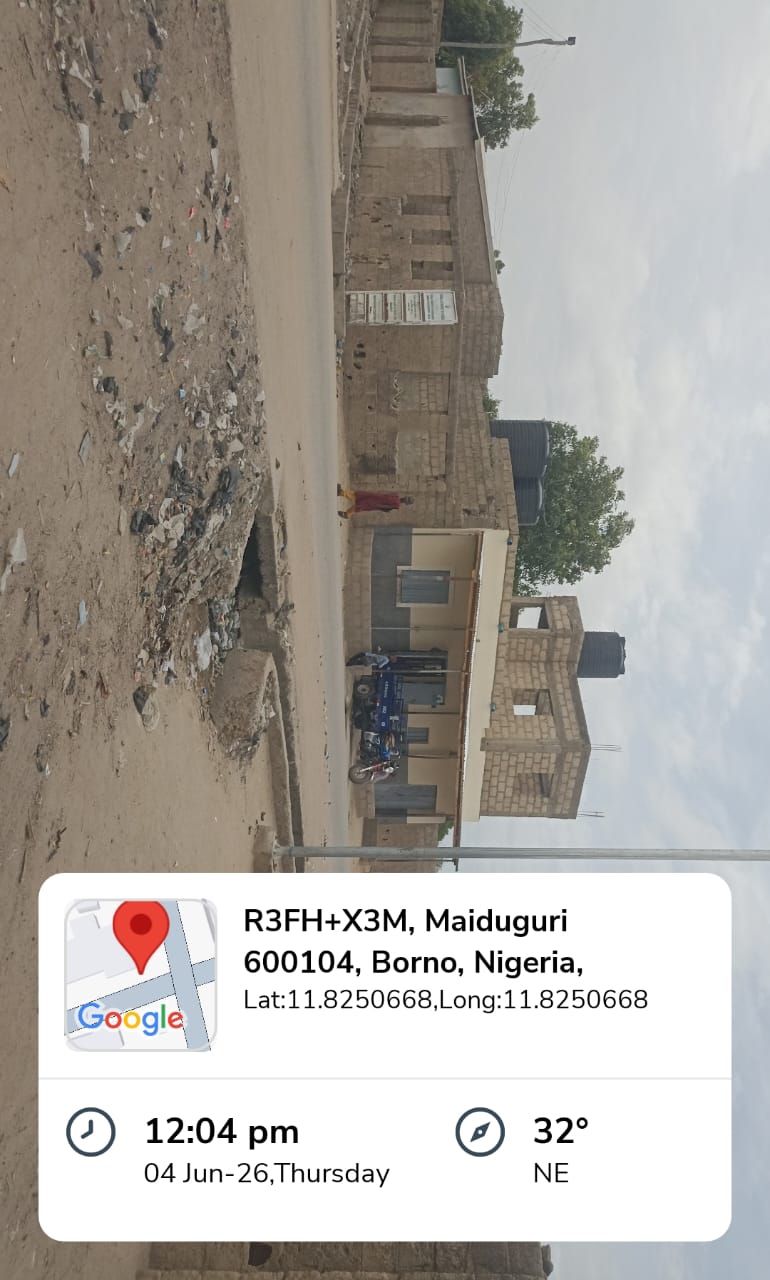
Daily during the rainy season, the residents would come out to block the drainage system from the main road to prevent water from coming into their houses, but the pressure of the water volume often overpowers them. From inside the community, some residents have turned it into a dumpsite—all in an effort to block the unwanted water.
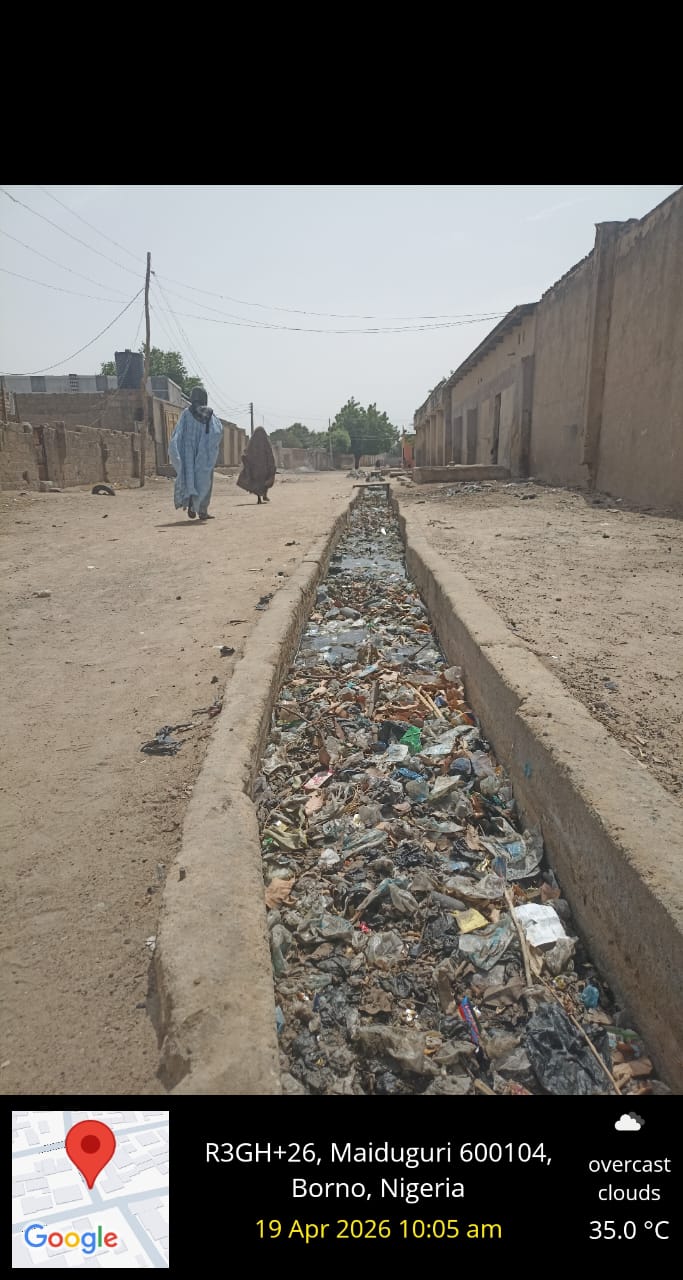
However, Mr Haruna said the work was not completed. Following the residents’ protest against the work, the contractor returned to the site to finish his job. He was trying to extend the drainage system when a neighbouring community stood up against the contractor.
According to Mr Haruna, the neighbouring community claimed the state government had already promised to construct a road for them, and the drainage system might discourage the state from fulfilling its promise.
But this was not the actual reason. As this reporter would later learn, the community members were only discouraged by the poor quality of the work in their neighbour’s area. They demanded a standard drainage system with compensation for soakaways, but the contractor said the project specification did not include compensation.
Following the community’s resistance, Mr Haruna further claimed that the contractor had gone to another area in the community to finish his work and insisted that the area he had gone to was part of the work plan after this reporter questioned the change of location.
But the change of location was the crux of the matter because the new drainage is supposed to be connected to a functional drainage for easy water distillation, so that the primary community would not have suffered.
Mr Haruna Speaks on the Second Contractor, Claim One Project for Two Contractors
In 2023, the Federal Ministry of Environment awarded two contracts for erosion and flood control, N30 million for each, in Jere Local Government of Borno. While the first was awarded to Henrybuz Global Service Limited, as discussed above. The second contract was awarded to Dallas Engineering Limited. He was also paid the same month with the same description of work as the first contractor.
But in the community, there was no signboard indicating his work.
Responding to questions, Mr Haruna claimed he had received a second contractor in the community, but he was unsure if it was Dallas Engineering Limited.
What Mr Haruna said was corroborated by Mr Kwada, the ministry representative from Abuja.
“The second contractor was not Dallas Engineering Limited. It was AJK Nigeria Limited. The second contractor was not paid a kobo, and he left the job and went away. I don’t know anything about Dallas Engineering Limited,” Mr Kwada said. Yet, there was no information across open sources that linked AJK Nigeria Limited to the project. He promised to share the contact phone numbers of the contractors, but he never did.
But confusion arose when Mr Haruna showed the work he claimed was the completion part of Henrybuz Global Service’s contract as the work of the second contractor. Yet, unlike the first contractor who had his signboard installed in the community, there was no signboard for the second contractor. The work there was also a less-than-kilometre drainage system, abundant midway on the road, without connecting either side to any drainage system.
But this puzzle remains: if the second contractor was not Dallas Engineering Limited, where did Dallas Engineering Limited work, since they were fully paid to work in the state?
What The Contractors Said
Firstly, this reporter spoke with the owners of Henrybuz Global Service Limited, who were accused of not completing their work after receiving full payment.
When contacted, Henry Ekwugha, who described himself as a person with significant control over the company, said he had completed his work according to the contract agreement.
”I am very sure we have completed this project, and we have our completion and handover certificates. It was my engineer who did the work. I will call my office to get those certificates for you,” Mr Henry said. But Mr Henry never sent those certificates.
Our correspondent also tried to reach out to the owners of Dallas Engineering Limited. The company’s registration details showed Ojediran Tayo, Oni Sunday Victor, Omolara Oni, Oni Irewami, and Oni Triumph Aduragbemi as directors of the company.
However, Mr Ojediran Tayo, who held significant control, was reported dead as of April 13, 2026. According to the Corporate Affairs Commission, the company’s official office address is No. 59 Dubai Crescent, Sun-City Estate, Abuja, FCT. However, the office was not found at that location. Efforts to speak with other officials proved abortive.
Yet, the poor handling of the project continued to create a fear of uncertainty in the community, especially as the rainy season had already set in, with warnings already given of possible flooding, including in Borno State, by the Federal Ministry of Environment last April.
“Our Children Are Not Going to School” — Parents, Community Leaders Speak Against Abandoned Work
Mallam Shettima said they were all happy when the contractors visited their community. They thought their suffering had come to an end.
”There was a time I didn’t use my house for three good days. This was not our situation before. After a rainfall, give it a few hours, and all the floodwater will sink into the ground. These interventions have only made our situation worse,” Mallam Shettima said. He explained, however, that children suffer the most from the situation.
“The drainage system now brings water from other communities. The floodwater is usually very dirty and contaminated. And anytime we have this situation, children do not go to school because of infections and other diseases. Last year, it caused a lot of malaria and even cholera among children, including my own children,” Mallam Shettima, a retired civil servant, lamented.
“Every sensible person will know that this drainage is badly constructed. Firstly, it is not deep or wide. Secondly, it is linked to a main road drainage system to collect water and bring it to our community, while here in our community, it is linked to nowhere. How can anyone say the work is good? I believe if the government seriously wanted to address our situation, they would not do something like this,” Adamu Musa, a senior member of the community in his 60s, also commented.
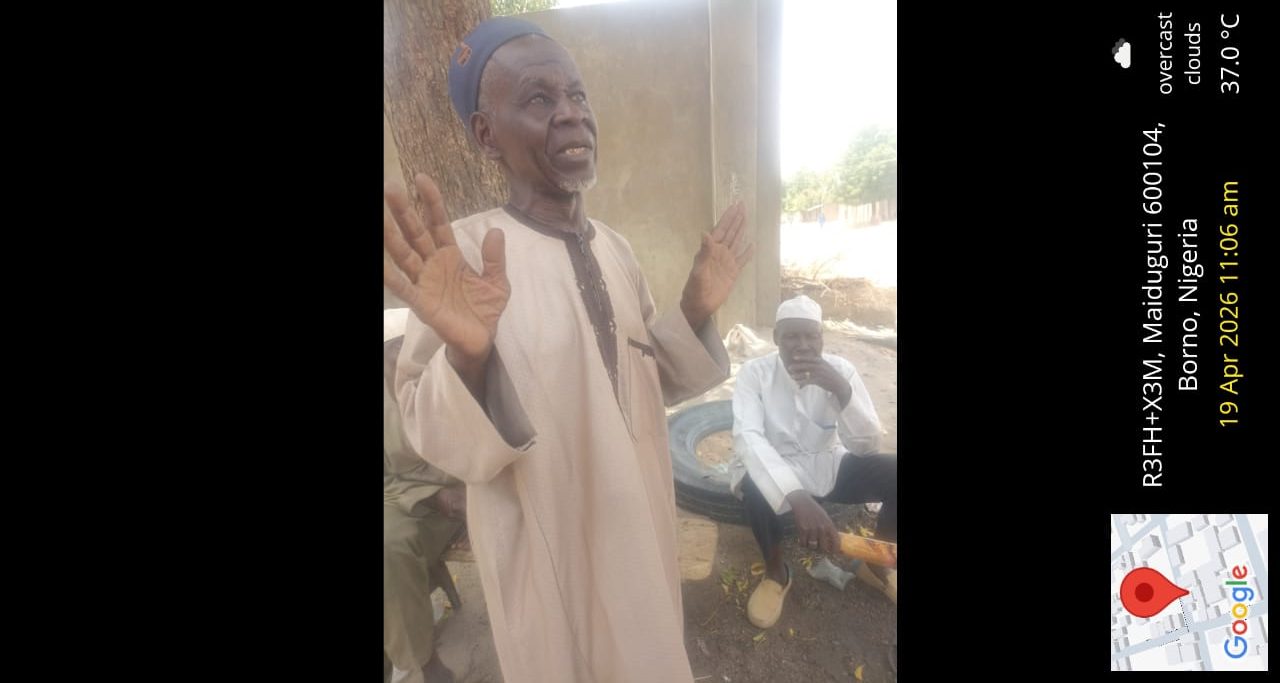
But Mallam Shettima and Musa were not alone in this suffering.
The three traditional leaders governing different sections of the community—Bulama Usman, Bulama Kyari Madu, and Bulama Mustapha—also described the intervention as something that has only made the situation worse.
”Before the intervention, I was not experiencing floodwater inside my house. But last year, my house was flooded because the contractor chose to abandon the drainage system halfway,” said Bulama Kyari Madu, a traditional community leader.
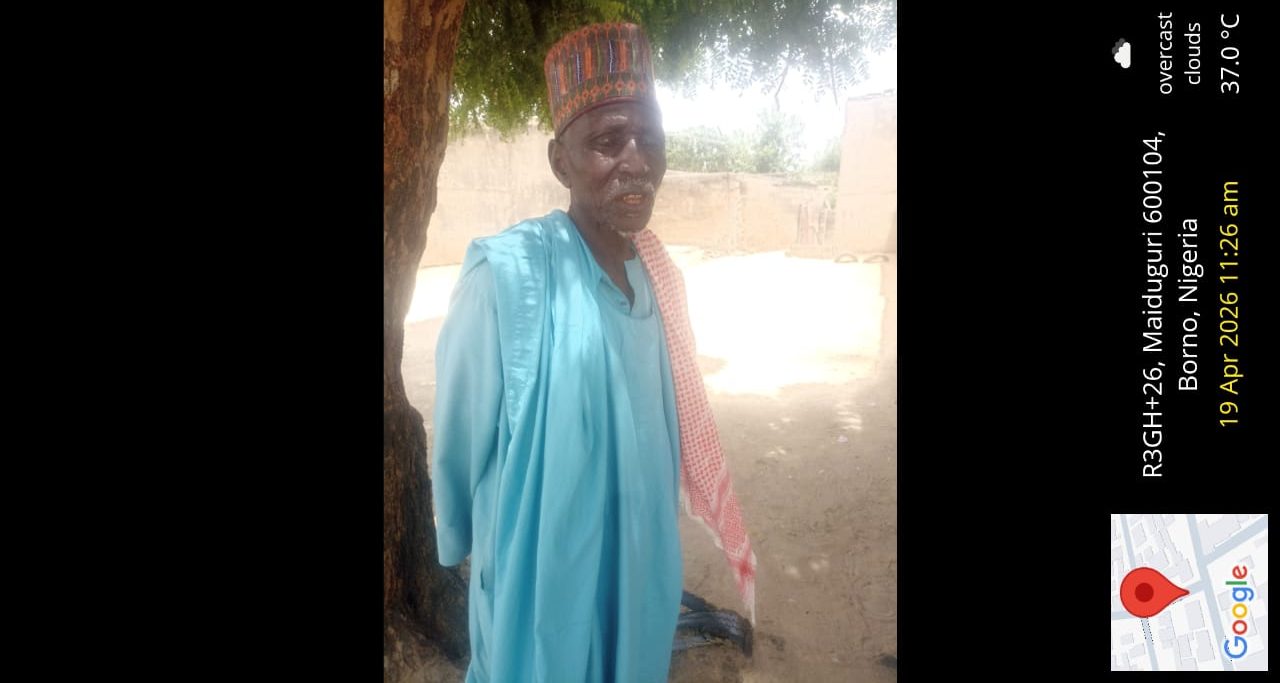
The situation of the children only deepens the menace of out-of-school children and frustrates government efforts to reduce their numbers in Borno State.
According to data by Radio Ndarason Internationale, although Borno State has significantly reduced its out-of-school children population from over 2.2 million to approximately 700,000–800,000 as of early 2026, marking a 70% reduction, the progress is driven by government investments in rebuilding schools and the “back to school” initiative. Despite this, conflict-related displacement and insecurity continue to threaten education.
This procurement fraud is now a new layer added to the factors that are undermining the progress made.
In the community, residents are now left to their faith, with perennial floods continuing to destroy their valuables and denying children access to school when the flood and erosion control projects were meant to address it.
Despite this, the contractors argued that their work followed standard and it was completed. However, experts have disagreed with them.
Expert Opinion on Procurement Quality
This reporter sought the expertise of several civil engineers to provide a professional assessment of the project. However, almost all of those contacted felt uneasy about critiquing a colleague’s work. One exception among them agreed to provide his insights, but only on the condition of anonymity.
After a tour of the project site, he noted that the work appeared to be ongoing.
“What I can say about it is that there are a lot of compromises here and there. I think the work is affected by limited space because the width appears too narrow. It is expected that if the channel is narrow, it should be deeper so that it can drain more water at the same time. However, a final conclusion cannot be reached since the work still appears to be ongoing,” he said.
Supervising Ministry Speaks, Denies Knowledge of Company They Paid and the Work It Supervised
The provisions of Section 16 of the Public Procurement Act 2007 (as amended) mandated every MDA to keep procurement records for a minimum of 10 years after execution, and to allow public inspection of project records. The Act also empowers every accounting officer of MDAs to ensure value for money spent on every public procurement and should be held responsible for any breach.
However, our correspondent approached the Federal Ministry of Environment—which supposedly planned, awarded, and supervised the procurement—for clarification on three things: what Henrybuz Global Service was contracted to do in the community and whether they completed their part; where Dallas Engineering Limited worked in the state since they were paid in full; and whether there is any explanation regarding AJK Nigeria Limited, who is alleged to be the second contractor. Why were they paid without completing their work?
In her remarks, Mrs Yakaka L. Kolo, Borno State Controller of the Federal Ministry of Environment acknowledged supervising Henrybuz Global Service Limited.
“Good day, sir. I was informed about the issue yesterday, and the letter is with me. The project was executed, I think, over two years ago,” Mrs Kolo stated in a WhatsApp message to this reporter.
But when this reporter asked what the company was contracted to do in the community, the controller claimed she was only given the bill of quantities to see.
According to her, it was Mr Kwada, their ministry’s official who accompanied the contractors from Abuja, who had the bill of quantities. Except for the site handover certificate to the contractor, she did not have anything regarding the project.
“Even at the time of the project, I talked about the length of the gutter, but they said it was based on the specifications in the bill of quantities, and there were even little adjustments made due to some obstructions,” she explained.
Although the community is complaining about the work, she clarified that residents did not approach her office with their complaints.
“About the complaints in the community, there were no statements reported to my office. I can remember at that time I gave my contact information for them to report if there were any complaints,” she added.
This reporter inquired where Dallas Engineering Limited worked in the state, but the controller noted that her office knows nothing about the contractor.
“Yes, for the other project too, my office has no idea about that. I have no information whatsoever. It’s our job to at least try our best to work for the community if furnished with the right information,” Mrs Yakaka L. Kolo said, but promised to investigate and get back.
But when this reporter contacted her a week later, the controller maintained her stance that the ministry did not know anything about the contractor, as if he had been paid by a ghost. She further asked the reporter for the document indicating payment to the contractor. After some days, the controller claimed the project was executed in the backyard of the Borno State Water Treatment Plant, opposite the University of Maiduguri.
At the location, the project was a drainage system less than half a kilometre long, which supported a pipe that emptied waste water from the plant, but there was no signboard.
The controller claimed they brought contractors to the site in 2024, yet residents who participated in the construction claimed the project was executed in the last four months, and it was supervised by their neighbour, who is an official of the state water treatment plant. Engineer Abubakar Musa, director of the plant, would not talk to journalists until permission is sought from his superiors.
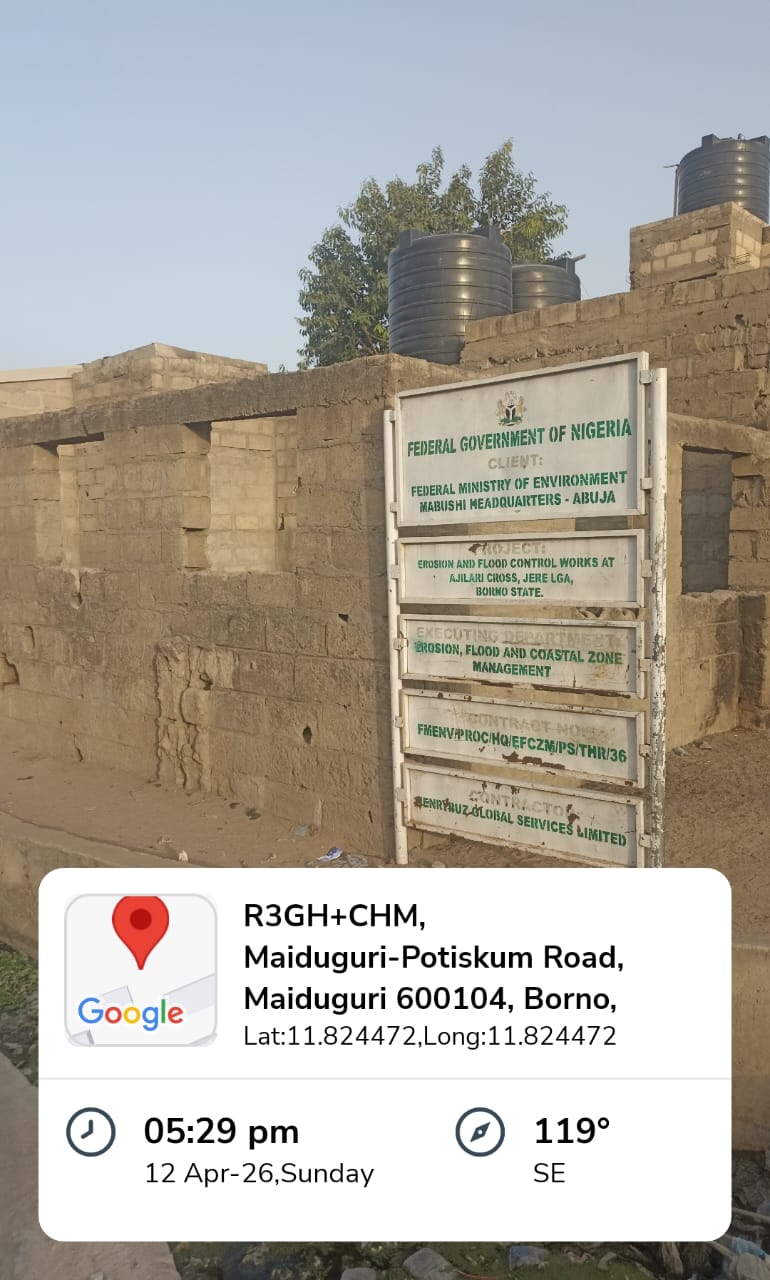
Yet, the controller’s office doesn’t have any documents, not even a site handover certificate, to confirm their claim.
But later findings would reveal all of this to be a cock-and-bull stor. Insiders in the ministry said the field office exists in name only. The officials, including the controller, are there just for formality’s sake. Contractors come into the state to execute projects without the knowledge of the field office. Sometimes, the office of the controller is forced to come up with a completion report for a project it knows nothing about. Although the controller has denied this, she could not prove anything, despite having enough time to investigate the matter with the headquarters.
The projects were not constituency projects. They are special interventions under the ministry’s unit of Erosion, Flood and Coastal Zone Management. Furthermore, the lawmaker of the region holds a high role in monitoring for proper execution.
Yet, when contacted, Satomi Ahmed, house representative representing Jere Federal Constituency refused to speak or respond to messages sent to him. He was also not picking up calls.
“We Will Take this Up” — Civil Society Organisations React
Civil society organizations in the state have condemned the procurement fraud.
In his remarks, Abubakar Abdullahi Sulaiman, chairman of the Network of Civil Society Organisations, described the situation as a total disregard for the Public Procurement Act.
“From our end, we will make sure we invite the contractor, the Ministry, you the journalist, and the community for further engagement,” Sulaiman said.
But what actually happened was a brazen show of irresponsibility and a disregard for bureaucratic procedures and the Public Procurement Act by the ministry officials mandated to oversee the monitoring and execution of the project. This is especially true of the office of the state controller, who directly represents the permanent secretary—whose office is designated as the chief accounting officer of the ministry under the law. By virtue of that position, the office is responsible for accounting for all public spending and to ensure that monies are spent to achieve value for money.
According to the 2024 Infrastructure Industry Report, Nigeria grapples with an infrastructure deficit because its total infrastructure stock constitutes only 30% to 35% of its GDP. This falls drastically short of the 70% international benchmark recommended by the World Bank for emerging, middle-income economies.
Unfortunately, the Ministry could not account for a project made to improve this infrastructure for which it had already paid the contractor, while Nigerians continue to suffer the consequences.
Meanwhile, section 58 of the Public Procurement Act states that any public official who fails to do their work and is found guilty under these provisions faces summary dismissal from government service and a prison term of not less than 5 calendar years without the option of a fine.
This report was funded by Budeshi Media Grant, an initiative of the Public and Private Development Centre.