



Again, I dare say, If Nigeria was better, many of those young men and women would never have left. The uncomfortable truth is that …
Yesterday, I chatted with a good friend of mine, whom we met during our National Youth Service at Abia State. Presently, she is abroad. When I asked her about her home country, she said everything was fine except that the owners of the country have started complaining about the rising influx of migrants to their country. As I read that, I quickly retorted: If Nigeria was better, hence, the title of this piece.
Also sad to recall, recently, I watched yet another disturbing video of Nigerians being chased, assaulted and humiliated in a foreign country. The images were familiar. The accusations were familiar. The outrage, too, was familiar. Whether in South Africa or elsewhere, the story has become painfully repetitive: Nigerians arrive in large numbers, local tensions rise, politicians exploit those tensions, and our compatriots become convenient targets.
The immediate response is often to condemn xenophobia, and rightly so. No human being deserves to be attacked because of nationality. No migrant should live in fear because of where he was born. Yet, while denouncing those attacks, we must also ask ourselves a difficult question: Why are so many Nigerians willing to endure such hostility in the first place? The answer lies not in Johannesburg, London, Toronto or Dubai. It lies in Abuja.
There is no place for argument over the truth that, for decades, Nigeria has been blessed in ways many nations can only envy. Vast natural resources. A youthful population. Fertile land. Strategic location. Entrepreneurial citizens. Yet, despite these advantages, millions of Nigerians continue to seek opportunities elsewhere, often under circumstances that expose them to discrimination, exploitation and danger. The tragedy is that this migration is not primarily driven by adventure. It is driven by necessity.
Again, I dare say, If Nigeria was better, many of those young men and women would never have left. The uncomfortable truth is that the greatest exporter Nigeria has produced over the past two decades is not crude oil. It is human frustration. Every year, thousands of graduates emerge from universities only to discover that their certificates have become souvenirs rather than passports to opportunity. Hospitals struggle with inadequate facilities. Schools deteriorate while political office holders spend public funds educating their children abroad. Roads become death traps while budgets for their rehabilitation disappear into private pockets. Entire communities remain in darkness despite billions allocated to the power sector over the years. Yet, somewhere within this dysfunction, a privileged class continues to flourish. This is where governance enters the conversation.
Many of the policies introduced over the years have been designed less to create prosperity for citizens and more to preserve comfort for those already in power. Programmes are announced with fanfare but rarely with accountability. Committees are established, reports are written, conferences are held, and press statements are issued. Meanwhile, the ordinary Nigerian continues to navigate a country where survival itself has become a full-time occupation. On the other hand, corruption, unfortunately, remains the silent architect of this national tragedy.
There is no gain saying that funds earmarked for roads vanish, leaving behind potholes and promises. Resources allocated to hospitals evaporate, leaving patients to supply their own medications and sometimes even basic medical equipment. Budgets approved for schools disappear, while classrooms crumble and laboratories become museums of abandoned ambition. The power sector perhaps offers the most painful example. For instance, for decades, Nigerians have listened to grand declarations about electricity reforms. Governments have changed. Ministers have come and gone. Consultants have written reports. Investors have held conferences. Yet millions still rely on generators for what should be the most basic public service. No serious economy can thrive under such conditions. No industrial revolution can emerge from perpetual darkness. And when opportunities disappear at home, people naturally look elsewhere. That is why it is simplistic to view migration merely as a personal choice. Often, it is a referendum on governance. When citizens vote with their feet, they are expressing a verdict on the conditions under which they live.
It is sad to note that the consequence is now visible across the world. Governments complain about irregular migration. Citizens of host countries worry about pressure on jobs, housing and social services. Political movements exploit these anxieties. Migrants become scapegoats. And among those migrants are countless Nigerians whose only offence was searching for a future they could not find at home.
What makes the situation particularly painful is the irony. Many of the same political elites whose decisions contributed to this reality rarely experience its consequences. Their children attend schools abroad. Their families receive medical treatment abroad. Their investments are secured abroad. Their retirement plans often lie abroad. When electricity fails in Nigeria, they have generators. When public hospitals deteriorate, they have private jets. When schools collapse, they have foreign universities. The burden of poor governance falls overwhelmingly on those who cannot escape it. Yet history has a peculiar sense of humour. It often reminds societies that privilege is rarely permanent.
History reminds us that empires have fallen. Dynasties have disappeared. Political classes that once appeared untouchable eventually confronted the consequences of their actions. The lesson is universal: no ruling elite can permanently isolate itself from the conditions it creates for others. Perhaps that is why, despite everything, there remains room for hope. Hope that Nigeria can still become the country its citizens deserve. Hope that public resources will one day serve public purposes.
Hope that roads will be built because they are needed, not because contracts are available. Hope that schools will educate rather than merely exist. Hope that hospitals will heal rather than merely survive. Hope that electricity will become a utility rather than a luxury.
And yes, there is another thought that occasionally comes to mind. The political class that sends its children abroad often assumes those countries will remain permanent sanctuaries. But the world is changing. Immigration rules are tightening. National priorities are shifting. Societies increasingly demand that outsiders justify their presence. One day, perhaps sooner than many expect, some of those privileged children may discover that foreign countries are not obligated to solve the problems their fathers helped create at home. They may find themselves returning to confront the very realities from which their families once sought refuge. If that day comes, it will not be an act of cruelty. It will simply be history completing a circle.
After all, there is an old wisdom that nations ignore at their peril: whatever goes around eventually comes around. And until Nigeria becomes a country where opportunity is available without a passport, where dignity does not require emigration, and where citizenship itself is not a burden, the images of Nigerians searching for better lives elsewhere will continue to haunt us. The real tragedy is not that Nigerians leave. It is that so many feel they must.
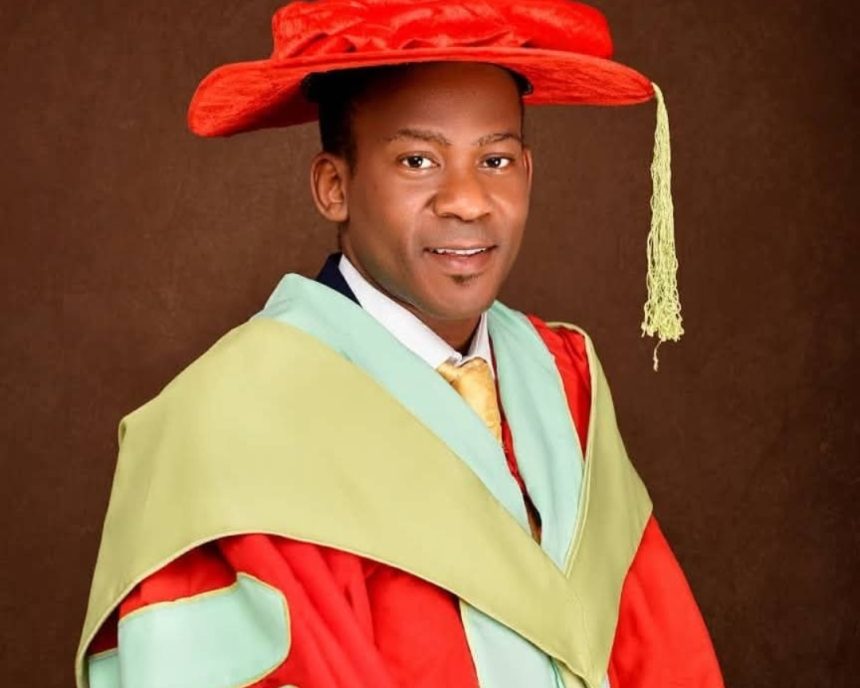
Anthony Ekpo Bassey, PhD, teaches Journalism at the University of Calabar, Cross River State.
NB: Opinions expressed in this article are strictly attributable to the author, Anthony Ekpo Bassey, PhD, and do not represent the opinion of TheInvestigator or any other organisation the author works for/with.