


“You can cook small quantities and keep it hygienic,” she advised, urging food vendors to adopt safer cooking and serving habits.
By Emmanuel Ita
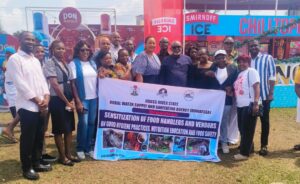
The Cross River State Rural Water Supply and Sanitation Agency (RUWATSSA) on Monday, December 8, 2025, organised a sensitisation workshop aimed at improving hygiene practices, nutrition education, and food safety among food handlers and vendors across the state.
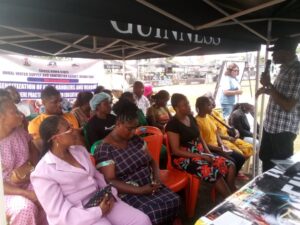
The training, held at Christmas Village in Calabar Municipality, brought together food vendors, small-scale traders, and other stakeholders in the food value chain to equip them with essential knowledge on safe food handling, proper sanitation, and the importance of nutrition in public health.
In his opening, Hon Sunday Oko, General Manager of RUWATSSA, emphasised that the initiative forms part of the state government’s broader effort to curb food contamination, prevent disease outbreaks, and ensure that residents have access to safe, nutritious food, especially during the festive season when food vending increases significantly.
Stressing that food safety remains a shared responsibility among vendors, customers and government agencies, he advised that “It is better to cook quality food and increase the price”.
Furthermore, he said, “If your food is contaminated, it may be your brother who will eat that food.”
Earlier, in his welcome address, the Programme Manager of RUWATSSA, Mr Ebit Bassey, reiterated that the agency organised the training to remind and equip food vendors with basic knowledge that directly affects public health.
He urged participants to take it seriously, even though it may appear simple, as though we do them daily, but consistency is where the profit lies.
A key presentation was delivered by the State Nutrition Officer (SNO) from the State Planning Commission, Mrs Nkem Ubana, who spoke on “Basic Nutrition and Balanced Diet.” She explained how poor storage, prolonged heating, the use of contaminated water, and exposure of food to flies contribute to foodborne and nutrition-related diseases.
“You can cook small quantities and keep it hygienic,” she advised, urging food vendors to adopt safer cooking and serving habits.
Another session focused on personal hygiene and food safety, led by the Nutrition Focal Person from Self Help Africa, Mr Ferdinand Anok. “Personal hygiene is very important, and we get a relationship with the food we dey chop,” he noted.
To drive the message home, he demonstrated how uncooked foods such as fruits should be properly washed under running water, how cross-contamination should be avoided, and the need to use clean utensils. He also reminded vendors of essential practices regarding how to cook, where to cook, and proper methods of food storage.
Environmental sanitation and waste management formed a major part of the discussions.
RUWATSSA’s Sanitation and Hygiene Unit, represented by Mrs Ikwo Bassey, highlighted the link between dirty surroundings and disease outbreaks. She encouraged vendors to maintain clean stalls, dispose of waste at approved collection points, and avoid blocking drains with organic waste.
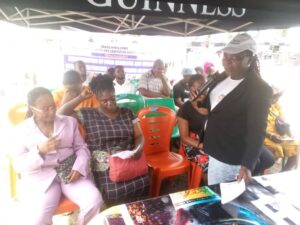
Also, Alice Egbara, Head of the Department of Nutrition, shared the objectives of the event and also distributed cooking aprons, hair covers, and disposable waste bags to all food vendors, an initiative sponsored by RUWATSSA.
In her vote of thanks, the Director of Administration, RUWATSSA, Mrs Patience Ebiet, appreciated the presenters and participants for their cooperation.
She noted that the agency plans to carry out follow-up engagements in other markets within the municipality to ensure wider compliance.
See pictures: