

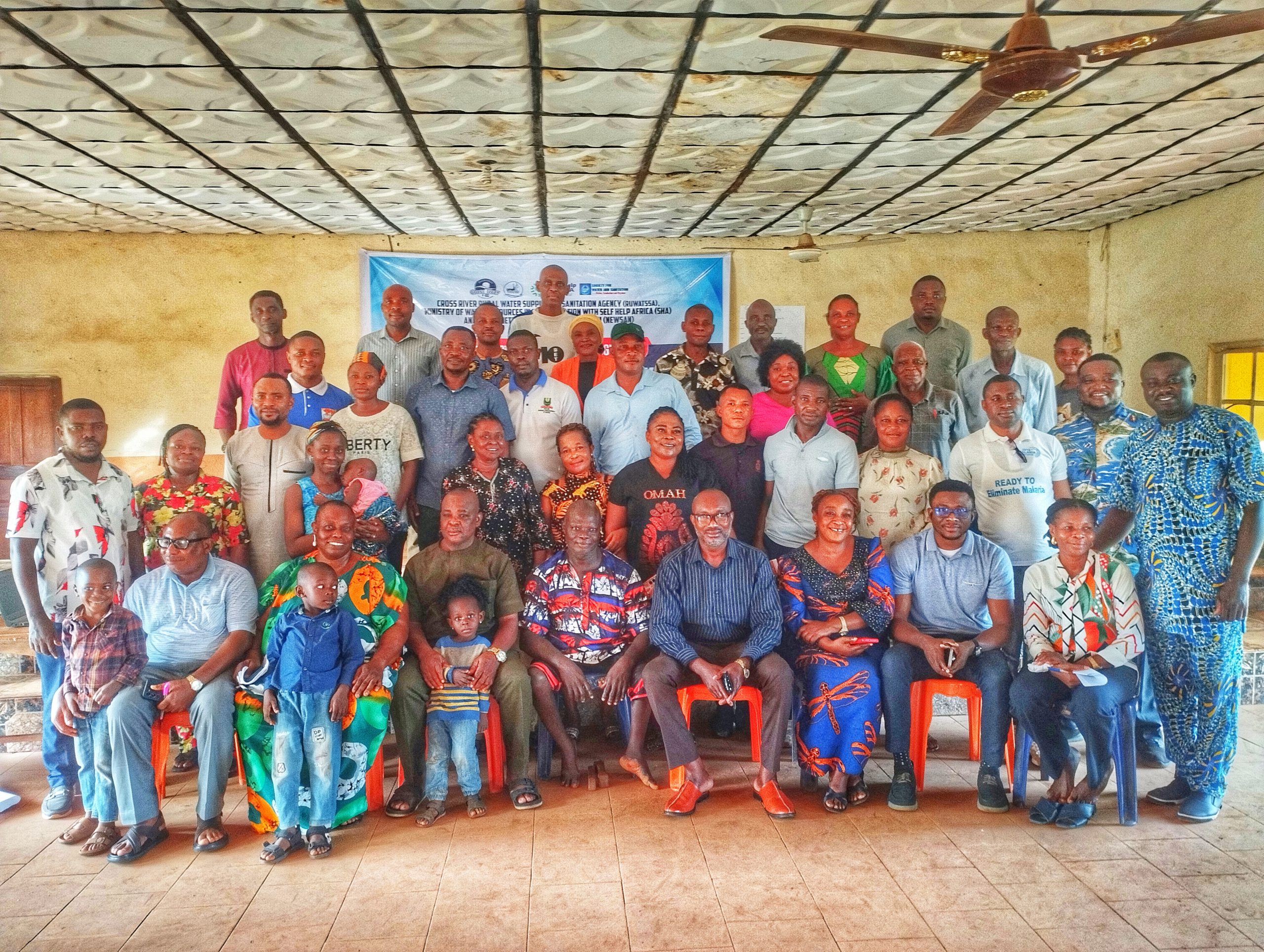
Facilitators were led by Mrs Kogbara Ayaba from the Federal Ministry of Water Resources, assisted by Mrs Ikwo Bassey from RUWATSSA, and representatives from partner organisations.
By TheInvestigator
In a significant step towards improving access to safe water, sanitation, and hygiene services, members of the Obubra Local Government Area Task Group on WASH (LTG-WASH) have completed a comprehensive three-day capacity improvement workshop.
The workshop, held at the Obubra Local Government Council Secretariat as part of the WASH Systems for Health (WS4H) Programme, equipped participants with essential skills in community-led total sanitation, hygiene promotion, water safety, gender mainstreaming, resource mobilisation, advocacy, and system strengthening. It was organised by the Cross River State Ministry of Water Resources in partnership with the Rural Water Supply and Sanitation Agency (RUWATSSA), Self Help Africa (SHA), and the Society for Water and Sanitation (NEWSAN).
Declaring the workshop open, the Chairman of the State Task Group on WASH (STG-WASK), Dr Okon Ita, said the state has demonstrated the political will needed to ensure the project succeeds in Obubra.
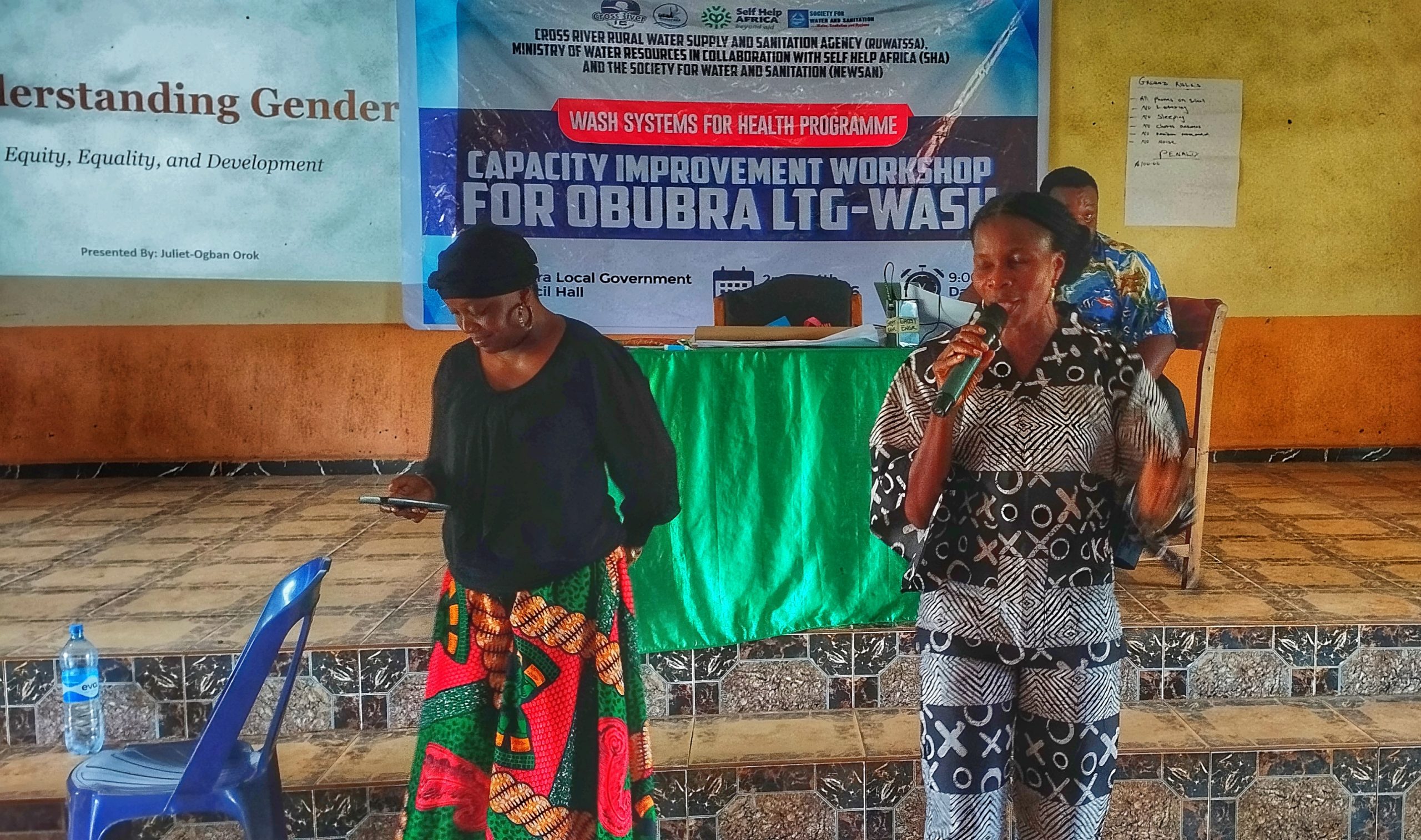
“The release of the counterpart funding speaks volumes amidst the launch of the state water policy and the ODF prohibition bill currently being worked on. With these, Obubra has no reason to fail, and I employ you all to put all hands on deck.” Dr Okon said.
Represented by Engr Eni Nkanu, the STG-WASH Chairman, said the training is packed to ensure nothing hinders the project’s success.
Facilitators were led by Mrs Kogbara Ayaba from the Federal Ministry of Water Resources, assisted by Mrs Ikwo Bassey from RUWATSSA, and representatives from partner organisations. They led interactive sessions on critical topics. These included the faecal-oral disease transmission routes through the F-Diagram, principles and triggering tools of Community-Led Total Sanitation (CLTS), the National Open Defecation Free (ODF) verification and certification protocol, Water Safety Plans, domains of hygiene, and Market-Based Sanitation approaches.
Participants also explored practical areas such as managing water schemes from request to handover, financial compliance and accountability, mainstreaming gender in WASH interventions, and strategies for effective advocacy. Breakout sessions enabled members to identify local WASH challenges in Obubra LGA, map available financial and non-financial resources, and propose solutions through coordinated action.
A major highlight was the collaborative development of a detailed work plan for the Obubra LTG-WASH, designed to guide sustained grassroots implementation of WASH initiatives.
The workshop was built directly on the recent inauguration of the Obubra LTG-WASH, which took place earlier in 2026 with Mrs Florence Asuk as Chairperson. This local platform is expected to drive community ownership, improve coordination, and address persistent issues such as open defecation and waterborne diseases in the area.
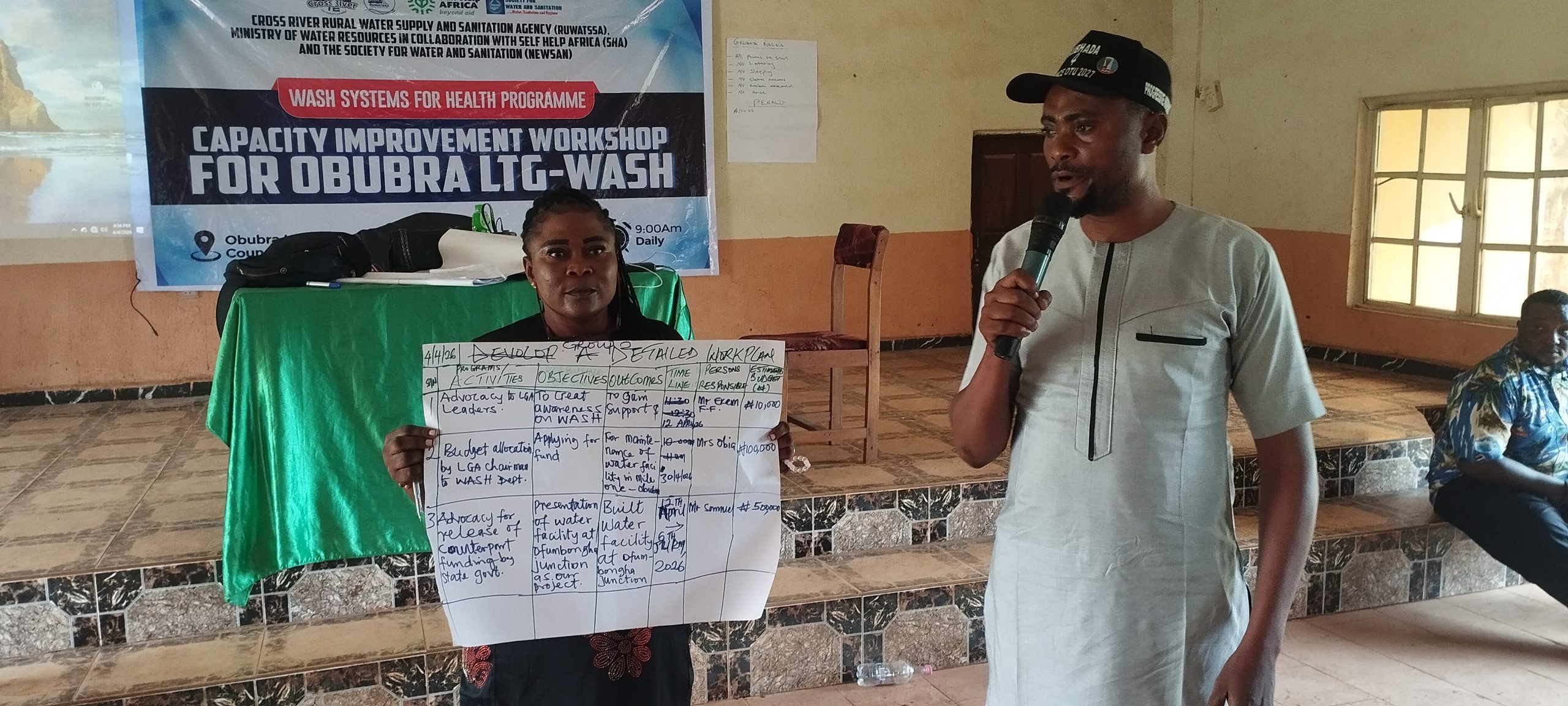
Speaking on the outcomes, the Obubra LTG-WASH alternate chairman, Mr John Nte, expressed renewed commitment to translating the acquired knowledge into tangible results, including stronger hygiene promotion campaigns, sustainable sanitation services, and effective resource mobilisation to support WASH projects in Obubra communities.
The initiative aligns with Cross River State’s broader efforts to strengthen WASH systems through policy reforms, institutional capacity building, and partnerships under the WS4H Programme.