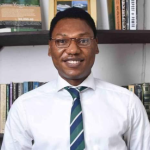
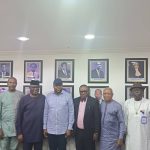
The government has proposed setting up the Nigerian Solid Minerals Corporation to oversee the sector. The corporation will have a share structure similar to the private sector, said Alake, the minister of solid minerals development.
By Justice Nwafor
Kakafu, Kwara State – Kakafu was once a quiet village with pristine, narrow farm roads and wheat fields as far as the eye could see. Locals, mainly from the Nupe ethnic group, lived happily off their land. In 2021, everything changed with the discovery of lithium, a lightweight metal used to make batteries to power electric cars and smartphones.
Suddenly, the village, located in north-central Nigeria, was swamped by undocumented, illegal miners and Chinese businessmen looking to source lithium. The farm roads grew wider, dustier and uneven from motorbikes, trucks and excavators. Many locals abandoned farming because there was more money in lithium mining. A tonne of lithium normally fetches around 200,000 Nigerian naira ($127), depending on the purity level.
Ibrahim Mohammed and his brother moved to Kakafu in early 2022 when the mining boom was still ramping up. He started as a miner but now acts as a coordinator between buyers and miners.
“If you want to mine, it’s easy,” said Mohammed, a lanky man in his mid-20s. “All you need to do is identify the portion of land, buy it from the owner, call boys, and they start digging, or you come with your excavator.”

“If you want to buy, we arrange the material for you, get a truck, you pay waybill, and you drive. Nobody will disturb you,” he explained. The “waybill” is a community development levy paid to the Lade District Development Association, a grouping of community leaders, including some from Kakafu. It is unclear whether the federal government sees any of the money.
From Kakafu, the lithium is trucked 215 kilometres to Ilorin, the capital of Kwara State in Nigeria’s central region. From there it goes to assembly points in Ogun and Lagos states from where it is shipped abroad avoiding taxes and royalties, according to the country’s Economic and Financial Crimes Commission, a government anti-graft agency.
Illegal Mining Crackdown
In February, the commission said it impounded truckloads of illegally mined solid minerals, including lithium from Kakafu, which was being sent abroad. The move is part of government efforts to crack down on illegal mining, which has included dozens of arrests.
President Bola Tinubu has long blamed illegal mining for funding weapons purchases and worsening conflicts in the northwest of the country. Community groups, however, argue that it is a response to poverty and poor service delivery. A parliamentary report this year estimated the country loses a jaw-dropping $9 billion a year from illegal mining.
The clampdown comes as Nigeria’s government is trying to shift away from an overreliance on oil and gas and more toward the untapped mineral sector rich in gold, tin, lithium, coal, gemstones, columbite and zinc.

The country’s Minister of Solid Minerals Development, Dele Alake, has estimated the sector could be worth as much as $750 billion, about twice the country’s current gross domestic product (GDP).
Yet over the past five years, mining has consistently accounted for less than 1% of GDP, according to a 2021 report by the Extractive Industries Transparency Initiative (EITI), which seeks to fight corruption in managing revenues from oil, gas and mineral extraction.
Better Known For Oil And Gas
Nigeria is better known as Africa’s biggest oil producer and has the largest oil and gas reserves in the region. It produces 1.8 million barrels per day (bpd), with output likely to reach 2 million bpd by the end of 2024, according to the Nigerian Upstream Petroleum Regulatory Commission. The state oil firm NNPC posted a 28% rise in annual net profit to 3.297 trillion naira ($2.14 billion), according to Reuters.
Price volatility in the oil market has, however, affected Nigeria’s oil earnings – nearly all of the country’s past eight economic recessions were preceded by significant declines in crude oil prices, according to a 2021 study that examined the country’s economic recessions. Still, the oil and gas sector accounts for about 65% of government revenue and over 85% of the country’s total exports.
In 2021, the country exported 142,537,480 tonnes of solid minerals with a free-on-board (FOB) value of N167.87 billion ($101.29 million), according to the EITI’s report. Despite this volume, mining companies paid the government only N3.57 billion ($2.15 million) in royalties that year and N12.798 billion ($7.72 million) between 2017 and 2021.
The audit found that of the 1,214 mining companies operating in the sector, only 914 paid royalties.
More broadly, the country earned N193.59 billion ($115.8 million) from the sector, with the majority of revenue coming from taxes. These figures are nowhere near that of South Africa, a significant mineral producer, which earned an estimated $51.6 billion from mining in 2022, according to Statistics South Africa.
Maxwell Kuu-ire, policy analyst for West Africa at the Washington-based Global Financial Integrity research group, said Nigeria was unable to earn enough from the sector because of inadequate investment.
For example, the government has failed to fund and provide accurate and adequate geodata of solid minerals available in the country, which would help attract investors, said Kuu-ire. “Once you don’t have basic information about your mineral deposits adequate enough to give it to people, there will be challenges in investment. People will not bring their capital to put it into the sector so that they can take enough out,” he added.
He said critical infrastructure, such as roads and railways, also needed to be in place to attract investors.
Of the country’s 200,000 km of roads and highways, less than a third, or 60,000 km, are tarred and just under 11,000 km are in good condition. The railway system is no different. While the Lagos-Ibadan and Abuja-Kaduna train lines were recently modernised with loans from China, the rest of the railways are in desperate need of an upgrade, with tracks built several decades ago and the trains slow and noisy.
Lack Of Transparency
Paul Alaje, chief economist and partner at SPM Professionals, a management consultancy and risk advisory firm in Lagos, said the sector’s lack of transparency was a major problem.
“There should be a database of all miners with data on how much they bring in as inflows and what their books are like,” Alaje said. “For every natural and mineral resource that leaves Nigeria, we should account for them and know how much we make from them.”
The government has proposed setting up the Nigerian Solid Minerals Corporation to oversee the sector. The corporation will have a share structure similar to the private sector, said Alake, the minister of solid minerals development.
He said, “The federal government will hold not more than 25%, the Nigerian citizens will hold 25% by public shares, and private investors, each with a maximum of 10% of the shares of the N1 billion share capital.”
The government has also sought to act against so-called “licence racketeering” whereby individuals and companies resell mining titles to the highest bidders.
Alake recently announced that 924 dormant titles had been revoked, less than six months after about 1,600 other titles were withdrawn for failure to pay statutory fees.
To boost revenue, the government has also reviewed mining license fees and formed a special unit within the Nigeria Security and Civil Defence Corps structure to provide security to the mining environment and boost investor confidence.
Kehinde Bamigbetan, special adviser to the minister, said the government hoped to show some results soon. “The mining marshal command is just starting,” said Bamigbetan. “It is too early to assess the impact of its operations. When fully deployed, its impact will be more visible.”
This story was written as part of Wealth of Nations, a pan-African media skills development programme supported by the Thomson Reuters Foundation as part of its global work aiming to strengthen free, fair and informed societies. Any financial assistance or support provided to the journalist has no editorial influence. The content of this article belongs solely to the author and is not endorsed by or associated with the Thomson Reuters Foundation, Thomson Reuters, Reuters, nor any other affiliates. More information at www.wealth-of-nations.org