


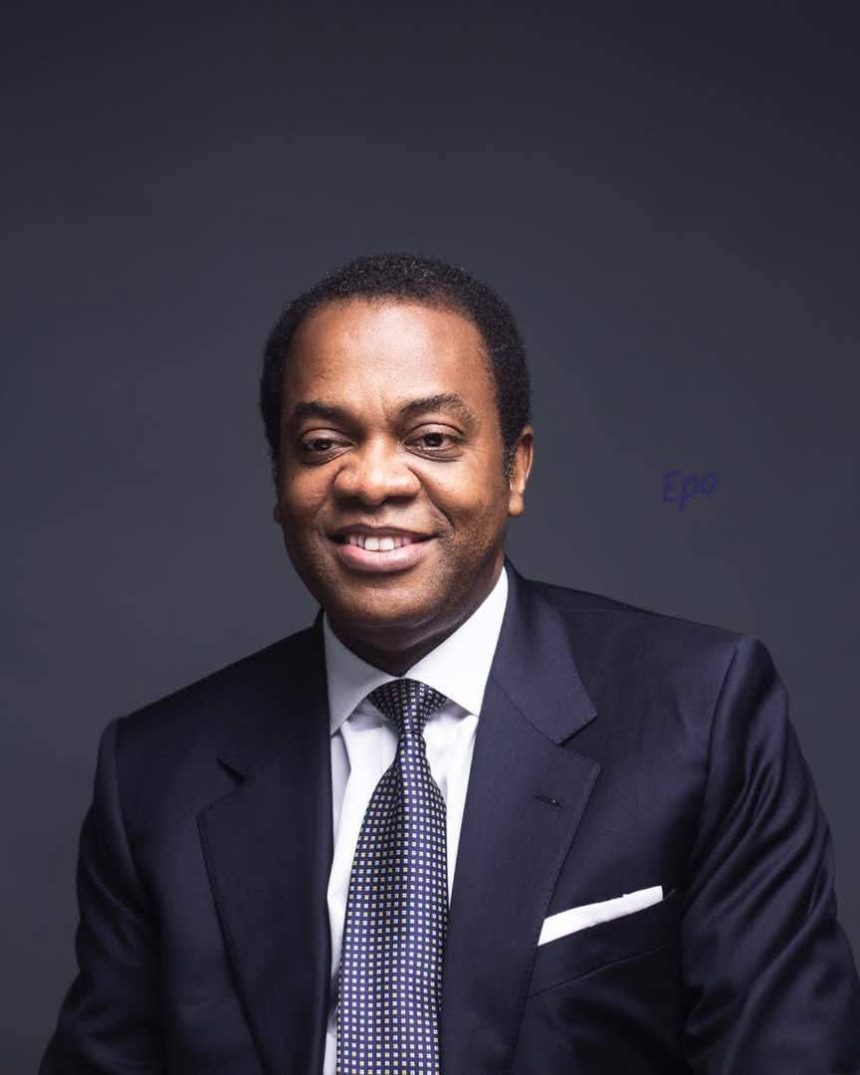
There are men who merely occupy office, and there are men who occupy imagination. There are leaders whose names are printed in government gazettes and forgotten in the gathering dust of history, and there are those whose legacies linger in the landscape long after the sirens have fallen silent and the convoys have disappeared. Donald Duke belongs to that latter league.
Time has a way of testing men. It strips away propaganda, peels off pretence, and exposes performance. When the banners have been folded, the billboards battered by wind and weather, and the applause dissolved into memory, what remains are the roads, the resorts, the reforms, the reputation, and the results. That is where the real report card resides.
I was still in secondary school during a greater part of Donald Duke’s tenure as Governor of Cross River State. Like many young Nigerians of that era, I was more concerned about homework than government work, more fascinated by football than fiscal policy. Yet even from that youthful distance, one could sense that something different was happening in Cross River. Years later, long after the governor’s office changed occupants, the projects, programmes, and policies associated with that administration continued to speak in sturdy, stubborn, and unmistakable tones.
Some leaders inherit opportunities, others create them. Some manage circumstances; others mould them. Donald Duke appeared determined to transform a quiet state into a compelling story. He did not merely govern Cross River, he sought to give it a personality, a profile, and a place in the national consciousness. For instance, the Calabar Carnival became more than a festival. It blossomed into a brilliant burst of colour, culture, creativity, and commerce. It turned a state capital into a seasonal spectacle and introduced countless Nigerians and foreigners to the richness of Cross River’s heritage. What was once a local celebration evolved into a continental conversation.
Then there was Obudu Mountain Resort, perched proudly among the picturesque peaks. Under Duke’s watch, it became a symbol of possibility, proof that tourism could be treated not as an afterthought but as an economic asset. The message was clear: development need not always wear the familiar face of factories and flyovers. Sometimes, it arrives through vision, value, and visibility.
Similarly, Tinapa emerged from the same spirit of audacious ambition. It was a bold attempt to blend business with leisure, commerce with convenience, aspiration with action. Opinions may differ about its eventual outcomes, but nobody can deny the daring dream that gave it birth. Great ideas often provoke great debates, and Tinapa certainly did both.
It is refreshing to the mind to recall that, what distinguished that era was not merely the projects themselves but the philosophy behind them. There appeared to be a conscious commitment to branding a state, beautifying public spaces, attracting investment, and cultivating confidence. Cross River was presented not simply as a geographical location but as a destination, not merely as a state but as a statement.
It is high time we learnt that leadership is often measured by budgets and balance sheets, but it is also measured by belief. Can a leader inspire citizens to see possibilities where others see limitations? Can governance create confidence where cynicism once reigned? Can public policy produce pride alongside progress? These are questions that continue to animate conversations about the Duke years. It may interest one to know that his admirers describe him as thoughtful, meticulous, and methodical. They point to a governance style that seemed to favour planning over panic, strategy over spectacle, and innovation over inertia. His critics, as expected in any healthy democracy, raise questions about sustainability and long-term outcomes. Such scrutiny is neither surprising nor unwelcome. Every legacy worthy of discussion attracts both applause and analysis.
Yet one fact remains difficult to dispute. Years after he left office, Donald Duke continues to command attention whenever conversations turn to governance, vision, and public leadership. In a nation where political memories are often painfully short, that endurance is significant. The true measure of a public servant is not the noise made while in office but the echoes that remain after departure. It is not the headlines of yesterday but the heritage of today. It is not the power once wielded but the imprint left behind.
And so, when history gathers its evidence, weighs its witnesses, and writes its verdicts, Donald Duke’s chapter in the story of Cross River State will not be remembered as a tale of timidity. It will be recalled as a season of bold branding, daring dreams, imaginative initiatives, and determined efforts to redefine what a Nigerian state could aspire to become.
The years have passed. The politics have shifted. The players have changed. But some projects still speak. Some policies still resonate. Some legacies still linger. And in the court of public memory, that may be one of the most compelling testimonies of all.
Anthony Ekpo Bassey, PhD, teaches Journalism at the University of Calabar, Cross River State.
NB: Opinions expressed in this article are strictly attributable to the author, Anthony Ekpo Bassey, PhD, and do not represent the opinion of TheInvestigator or any other organisation the author works for/with.